In brief
- Replacing a CRM may be the right answer, but it should be a conclusion—not the starting assumption.
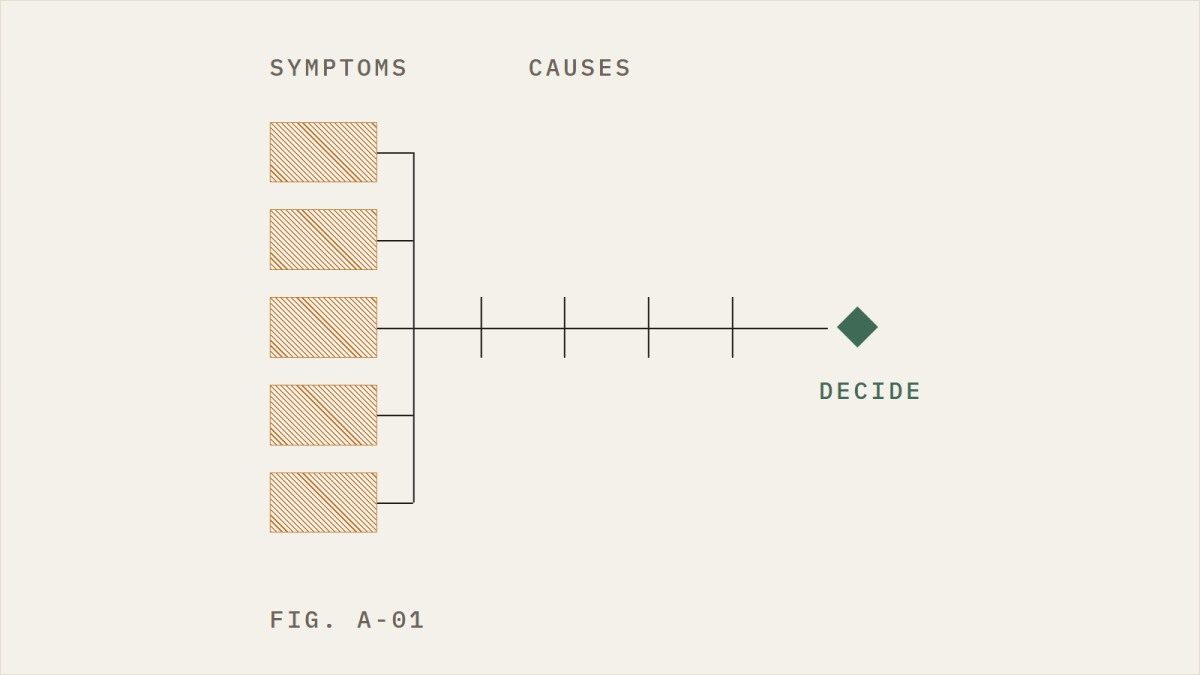
- Most CRM symptoms resolve to a smaller set of causes: the platform, customer data, ownership, process and hand-offs, integration or adoption.
- A defensible decision needs evidence about how the CRM is actually used—not only a feature comparison of platforms.
Why replacing your CRM isn’t the first question
A CRM replacement may be necessary, but the decision should start with evidence. The visible symptoms can come from the platform, customer data, ownership, process, integration or adoption. Changing software without separating those causes risks carrying the same problems into a more expensive system.
In practice, replacement decisions are often made under pressure. Reporting is questioned in a leadership meeting, a hand-off fails in front of a customer, or a renewal date arrives. Those moments reveal symptoms, but they do not show whether the constraint sits in the software or in the way the organisation works around it.
A CRM health check is a structured review of whether the system—and the way the organisation works around it—supports the outcomes the business needs. It takes more discipline than making a shortlist and is considerably cheaper than the wrong migration. What a CRM health check should examine sets out the business areas involved.
CRM symptoms and their likely causes
Symptoms are what people report; causes are what produce them. The two are easy to conflate because CRM symptoms are immediate and visible, while their causes may sit across data, ownership, process, integration, adoption or the platform itself.
The platform is often the most visible part of the problem and the least likely to be all of it.
The pattern below recurs across organisations of very different sizes and sectors. It is not a maturity model and there is no scoring: it is simply a reminder that the same symptom can have more than one cause, and that the cause determines the remedy.
| Reported symptom | Commonly blamed on | Often actually caused by |
|---|---|---|
| Reporting is questioned or reconciled by hand | Reporting tools and dashboards | Inconsistent definitions and stage meanings between teams |
| Records are incomplete or out of date | Data quality in the platform | No owner for the fields the business depends on |
| Work happens in spreadsheets | User resistance | A process the system was never configured to support |
| Hand-offs between teams fail | Integration between systems | Undefined responsibility at the point of transfer |
Distinguishing the two is not academic. Replacing a platform to solve an ownership problem reproduces the ownership problem on a new licence. Established data-management practice makes the same point about accountability preceding tooling.[1]
What a CRM health check should examine
A useful CRM health check starts with the business question rather than the configuration. It examines what the organisation is trying to achieve commercially, how customers move through the lifecycle, where hand-offs occur, and whether the information people rely on is fit for the decisions being made.
Evidence, not opinion
Interviews alone produce a consensus view of the problem, which is often the view of whoever is most frustrated. Usage evidence — activity patterns, record recency, whether the fields the business depends on are completed, how records progress through stages — provides a check on that view.
- Activity and record-update patterns, and where they have stalled
- Whether the reports and dashboards people cite are the ones they actually open
- Where work has migrated out of the system, and what it is working around
- Which stages, fields and definitions differ between teams
Where the boundary sits
Scope note
A business-led health check can identify where configuration, integration or architecture questions need specialist investigation, and frame why they matter commercially. It does not certify configuration, security, code, APIs or integration health, and it is not a substitute for that technical work where it is required.
Improve, consolidate or replace?
Three routes are usually available, and they are peers rather than stages. The evidence should indicate which one the business is actually facing — and it is entirely normal for the answer to combine parts of two.
Route 01
Improve
The platform broadly supports what the business needs and the constraints sit around it — in data, ownership, process or adoption.
Route 02
Consolidate
Duplication and fragmentation across systems are the real issue, and the organisation maintains more than it needs.
Route 03
Replace
Business requirements are materially unsupported, or staying costs more in effort and complexity than changing would.
What good CRM decision evidence looks like
Evidence is useful when it changes what a leadership team decides. That means it has to arrive in an order they can act on: what is happening, why it matters, what the options cost, and what should happen first.
01
Gather evidence
Stakeholders, usage data, reporting and the systems in context.
02
Test the findings
Check the diagnosis with the people doing the work.
03
Make trade-offs explicit
Priorities, sequence, effort and what is deliberately not being done.
04
Decide and own it
A roadmap the organisation can act on without external dependency.
◆Decision the business can defend
Questions to ask before replacing your CRM
If CRM replacement is already on the table, answer these questions before committing to a platform shortlist.
- What specific business outcome is currently not possible, and who is affected by that?
- Which of the visible problems would survive a change of platform unchanged?
- Who owns the customer data, the process and the decision today?
- What evidence do we have about how the system is actually used, as opposed to how we assume it is used?
- What would we have to fix regardless of which platform we end up on?
Frequently asked
Is a CRM health check worth doing if we have already decided to replace?
Often yes, because the requirements and the migration risks are the expensive part of a replacement. Knowing which problems are structural rather than platform-specific changes what you specify.
Does this require access to our production CRM?
Usage evidence is helpful but the scope is agreed in advance. Where platform access is not available or not appropriate, the diagnosis relies more heavily on stakeholder evidence and reporting, and says so.
Who needs to be involved?
The people who work in the system daily, the people who rely on its reporting, and whoever owns the commercial outcome. A diagnosis assembled only from leadership interviews tends to confirm what leadership already believes.
Sources and further reading
- DAMA-DMBOK: Data Management Body of Knowledge
DAMA International · reference framework for data ownership, governance and stewardship - ISO 8000-1:2022 — Data quality: Overview
International Organization for Standardization · overview, principles and structure of the ISO 8000 data-quality series - CRM & customer data health check
Bell to Sound · the eight business domains a health check examines
Written by
Phil Holden